
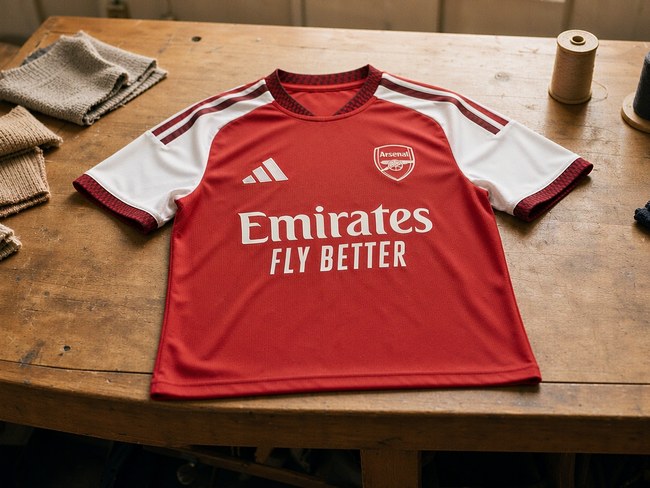
Two shirts can carry the same club, the same colour and the same price tag and still be built completely differently. Here is how a modern football jersey is put together — fabric by fabric, panel by panel, seam by seam — and how to check every part of it with your hands before you pay.
Almost every modern football jersey is polyester, but almost never one polyester: a typical shirt combines two to four different knits — a smooth body fabric, engineered mesh at the heat zones, a denser panel at the shoulders and a firm collar rib. Crests arrive embroidered, heat-pressed or woven; names and numbers are printed or applied as heat-bonded twill. In our 2026/27 men's range, 117 short-sleeve replica jerseys sit at $45.90, 55 long-sleeve replicas at $49.90 and 132 Authentic-line jerseys at $85.99 — and every claim on this page is something you can check on the shirt itself in under a minute.
Part map of a football jersey
- 01Collar — ribbed or taped neckline and the stiffest single part of the shirt. Press it flat: it should spring back, not stay creased.NECK
- 02Shoulder panel — a separate piece joining sleeve to body, and the first place a cheap shirt saves on stitching.SHOULDER
- 03Sleeve and cuff — the cuff is usually a narrow firm knit; look for a double-needle finish on the inside.SLEEVE
- 04Chest panel — the smooth face fabric, the tightest knit on the shirt, and where the crest sits.CHEST
- 05Side mesh insert — open engineered mesh running from underarm toward the hem; hold it to the light and the hole pattern changes.SIDE
- 06Back panel — often the largest ventilation zone; on many shirts it is a different knit from the front.BACK
- 07Hem — straight or curved; a folded, stitched finish keeps its line, a raw serged edge waves after a few washes.HEM
- 08Crest — the badge: embroidered, heat-pressed or woven. The three are easy to tell apart by hand.BADGE
- 09Sponsor area — printed or bonded film on the front; sits flatter than any stitched element on the shirt.FRONT
- 10Name and number — applied to the back after the shirt is made; the layer that decides how the shirt ages.SPINE
Schematic, not to scale. Zone names describe where each part sits on a standard short-sleeve shirt; exact layouts vary by maker and by season.
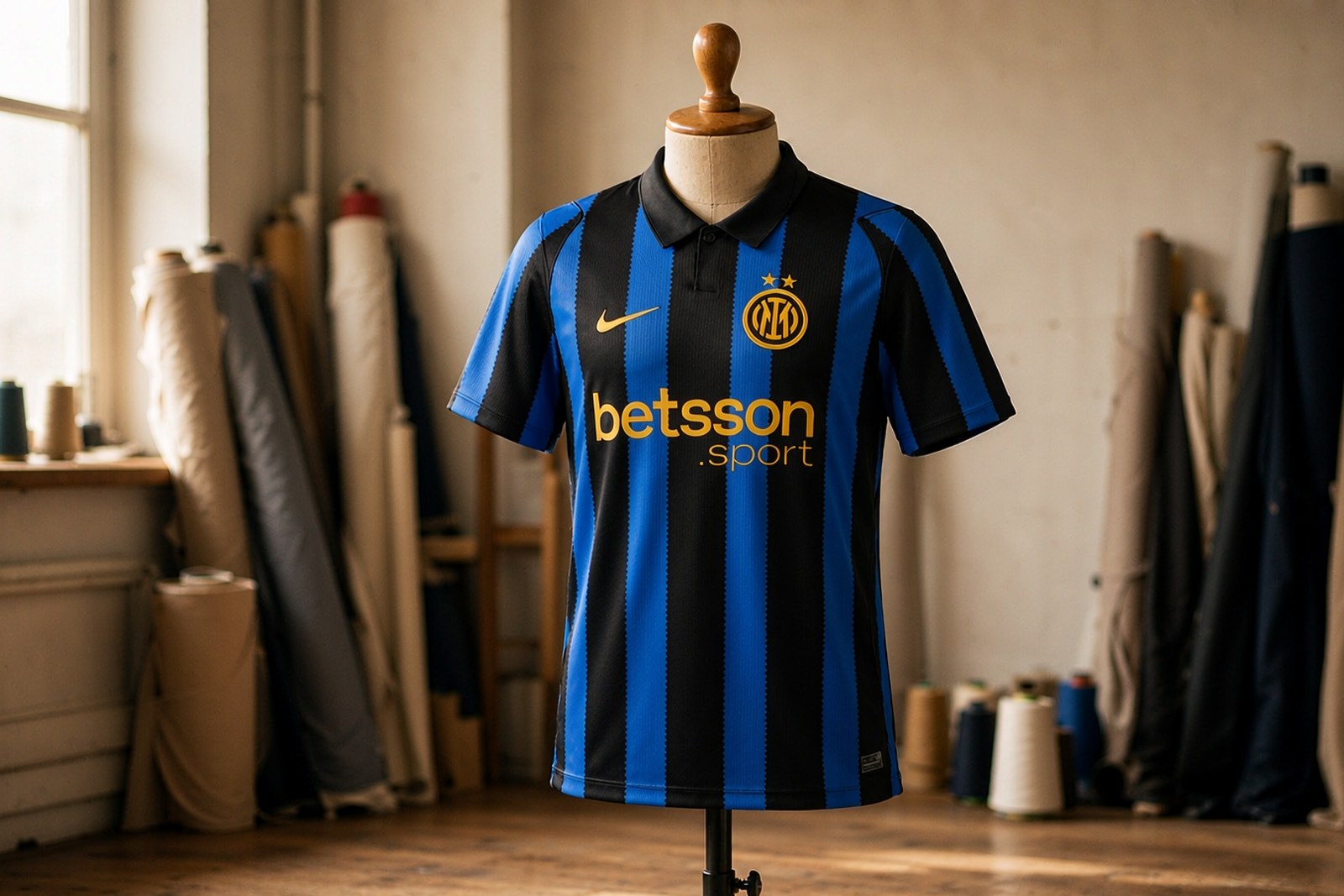
A Football Shirt Is Four Materials, Not One
Pick up any modern football jersey and the first thing to unlearn is the idea that it is one fabric. A shirt is a small assembly: a smooth, tightly knit face fabric for the body, an open mesh wherever the body runs hot, a denser panel where the shoulder takes the pull of a kit bag or a seatbelt, and a collar with enough body to survive being grabbed. The badge, the sponsor and the number are each applied by a different process again — after the fabric is cut and sewn.
A football shirt is not knitted. It is assembled — and every joint in that assembly is something you can inspect with your hands.
The one idea behind this pageThat is why the useful question in a shop is not a vague one about quality but a specific one about parts: what is each piece doing, and is it doing it well? Every check on this page takes seconds, needs no equipment, and works on any shirt from any maker at any price.
Everything below is organised the same way the shirt is: fabrics first, then where they sit, then the seams that join them, then the things applied on top — crest, sponsor, name and number.
The Four Fabrics You Will Actually Meet
Fabric names printed on a care label are unhelpfully similar, so it is easier to shop by what a fabric does. Nearly every shirt you will handle is built from four families of knit, and each one identifies itself without a label.
| Fabric family | What you see | What it feels like | Where it turns up | How it ages |
|---|---|---|---|---|
| Interlock body knit | A smooth, fine, almost opaque surface | Cool, dense, stretchy in both directions | The chest, back and main body panels | Holds colour best; pills where it rubs |
| Engineered mesh | Open holes arranged in a deliberate pattern | Feather-light; springs back when squeezed | Underarms, side panels and back heat zones | Cannot pill; can snag on velcro or jewellery |
| Jacquard or textured knit | Stripes or patterns knitted in, not printed on | A slight ridge you can feel with a fingertip | Striped shirts and tonal design panels | Pattern never washes out; shows seams less |
| Rib and collar knits | Fine vertical ridges | Firm and snappy, the least stretchy of the four | Collar, cuffs and placket edges | First part to lose shape if washed hot |
Four families, one shirt. On a striped shirt like several in the rack below, the pattern is usually knitted in rather than printed: drag a fingernail across a stripe — if you feel no ridge and the reverse shows the same pattern, the colour is in the fabric itself.
One honest caveat: a shirt that mixes all four families is not automatically better than a simpler one. What matters is that each fabric sits where its job is — mesh where heat builds, dense knit where the shirt gets grabbed, firm rib where shape has to hold for a season.
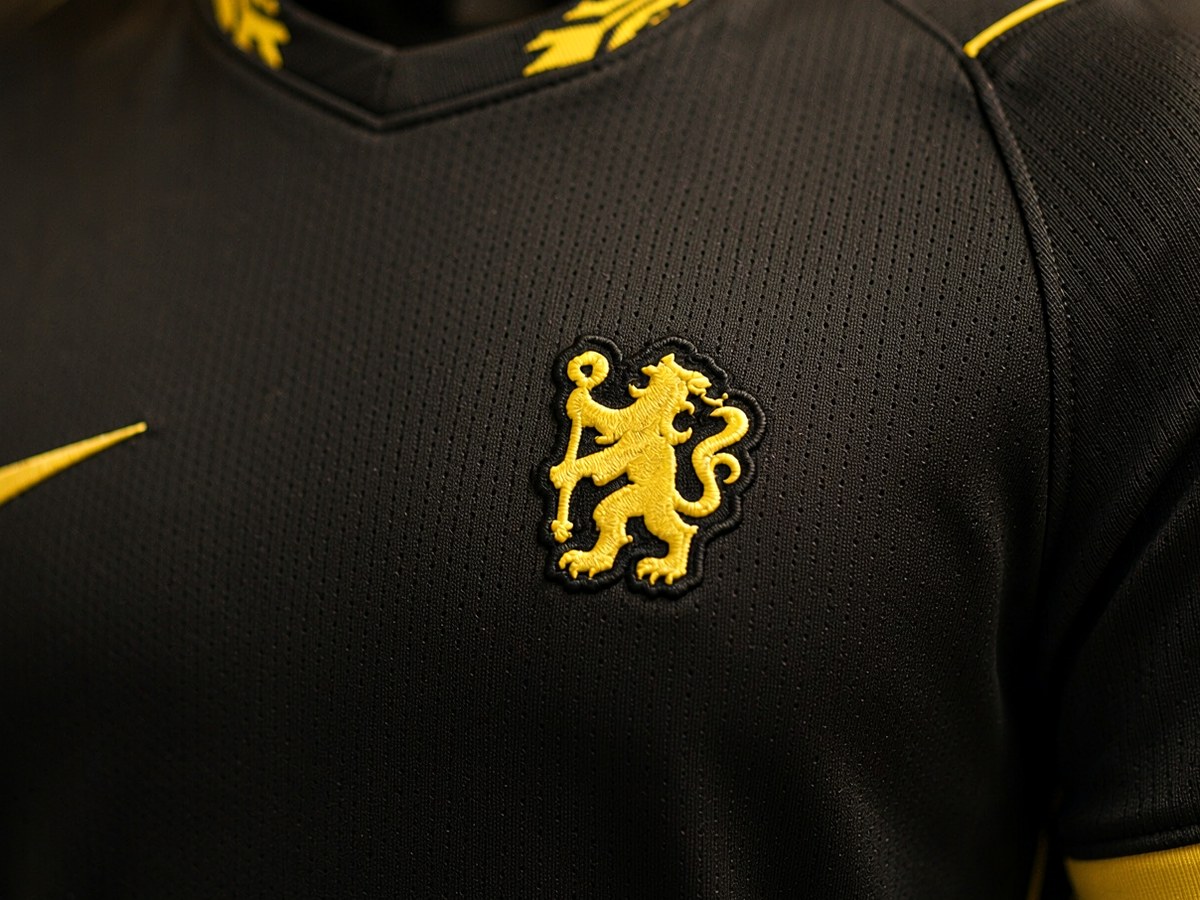
Where the Mesh Goes, and Why It Is Never Decorative
Mesh is the most visible material on a modern shirt and the most misunderstood. It is not a design flourish. It is placed where a moving body vents heat — under the arms, down the sides, across the upper back. On a carefully built shirt the mesh zones line up with the body's heat map; on a lazy one, mesh is sprinkled across the front, where it photographs well and does least.
- Hold a side panel up to the light. Engineered mesh changes pattern along its length — larger holes where airflow matters, finer where strength does — because ventilation and fabric strength pull in different directions.
- Stretch a mesh zone gently and let go. It should recover instantly; mesh that stays stretched was knitted too loose to survive a season of washing.
- Check where mesh meets solid fabric. That junction carries the shirt's main stress, so it should be joined with a flat, wide seam rather than a thin ridged one.
- 01Seam finish — flat and wide means flatlock stitching; a narrow threaded ridge means overlocking. Flatlock sits better against skin and marks a higher-spec build.SEAMS
- 02Crest reverse — thread tails or a stiff backing mean embroidered or stitched; a smooth, film-like surface means heat-pressed.BADGE
- 03Neck tape — a woven or knitted tape laid over the back-neck seam hides scratchy thread ends and keeps the collar square.NECK
- 04Care label — fibre content and wash temperature live here. Read it before you buy, not after the first wash.SIDE SEAM
- 05Hem finish — a folded, double-stitched hem keeps its line; a single serged edge starts waving within a few washes.HEM
What a Seam Tells You
Seams are the part of a shirt that never appears in product photos, and the part that decides how it ages. Two shirts cut from identical fabric can age years apart purely on seam choice.
The two seams you will meet
Flatlock stitching joins two fabrics edge to edge in a wide, flat band. It is stronger across stress lines, sits flush against skin and costs more to sew. Overlocking wraps the edge in a threaded ridge: fast, cheap, perfectly serviceable in low-stress places, and slightly irritating under a backpack strap. Neither is wrong — position matters more than type.
- Shoulders and sleeve seams: flatlock preferred. This is where a shirt takes load — kit bag straps, seatbelts, a friendly arm around the neck.
- Side seams under the arm: either construction works, but check the tension. Puckering here shows immediately on a fitted shirt and never presses out.
- Collar attachment: the one seam worth inspecting closely. A doubled or taped join keeps the collar square for the life of the shirt; a single loose row lets it roll within a season.
A quick way to train your eye: compare the shoulder seam of a shirt you already own and love with the shoulder seam of a cheap training top. The difference in width, flatness and thread neatness is the whole lesson in one glance.
Crests: Three Ways a Badge Gets On a Shirt
The crest is the part buyers inspect least and regret most, because it is also the part most exposed to a hot wash and a rough tumble dryer. Clubs and makers use three constructions, and each one announces itself if you know where to look.
| Crest type | How it is applied | How to identify it | How it ages |
|---|---|---|---|
| Embroidered | Stitched into the fabric, usually over a backing | Raised threads, visible stitch lines on the reverse, an edge you can feel with a fingertip | Outlasts the shirt; individual threads can catch |
| Heat-pressed | A layered patch bonded under heat and pressure | Perfectly flat; a smooth film on the reverse; edges sealed, not stitched | Edge-lift after repeated hot washes; hates high heat |
| Woven or knitted-in | Woven as a badge then stitched, or knitted into the panel itself | Crisp detail like a woven label; a stitched one shows on the reverse, a knitted-in one shows nothing | The most durable of the three; cannot peel, only wear thin |
None of the three is simply the good one. Embroidery carries depth and detail, a pressed crest sits light and never snags, and a woven crest survives laundry that would ruin the other two. What matters is that the method matches the way you will actually wash the shirt.
If you run only one check before buying, run it on the crest: turn the shirt inside out and look at what is actually holding the badge on.
The check that predicts a shirt's second yearThe same three-way logic applies to the sponsor on the front of most adult shirts. Bonded films sit flattest and lightest; flock and silicone-style applications feel rubbery to a fingertip; and any finish that raises a stitched edge deserves a thought about where a seatbelt or a kit bag strap will cross it.
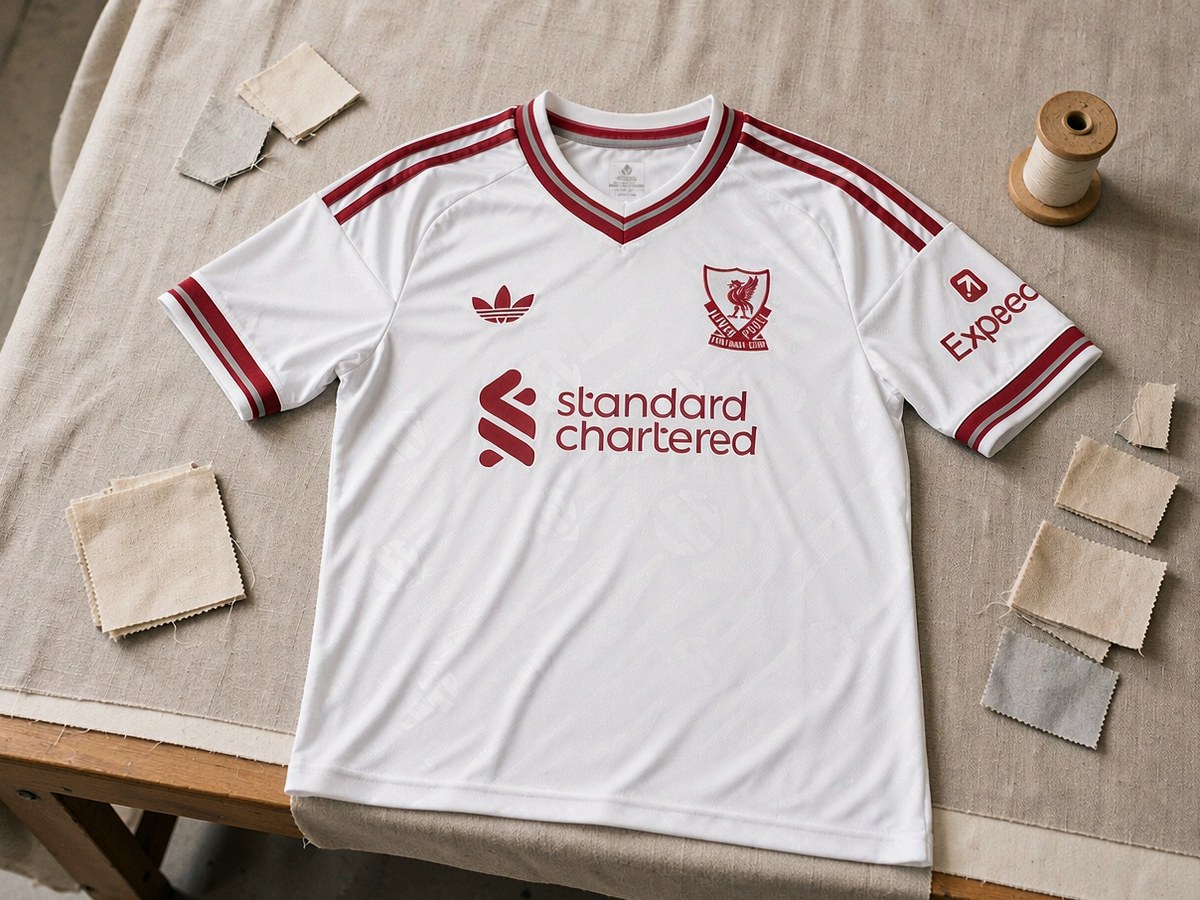
Names and Numbers: The Layer That Decides How It Ages
Everything described so far was built in. The name and the number are applied afterwards, onto a finished garment — which is exactly why they, rather than the fabric, are usually the first thing on a shirt to look tired.
| Application | Look | Feel | Watch out for |
|---|---|---|---|
| Printed film | Glossy, perfectly flat, uniform colour | Smooth, faintly plastic | Cracking along fold lines after many hot washes |
| Heat-bonded twill | Layered and textured with slightly raised edges | Like fine corduroy under a thumb | Edge-lift where the layer meets the fabric |
| Stitched twill | A visible stitch line around every edge | Raised and dense | Snags; the toughest finish, and the heaviest |
Player-issue shirts and top-tier fan shirts differ most here: the lighter applications keep weight down, the heavier ones survive more punishment. Neither is wrong — they are different answers to different seasons.
Care is where material choice and washing habits meet, so the full routine lives in one place: how to wash a jersey without ruining the numbers covers temperature, drying and how each of these applications behaves in a machine.
The short version for this page: every application type is ruined by heat and friction long before it is ruined by water. If you remember nothing else about the lettering on a shirt, remember that the wash temperature on the label is not a suggestion.
Six Shirts, Three Makers, One Price
Everything above is easier to learn on a real rack than in a description, so the six shirts below are the ones we would hand a beginner: men's 2026/27 home replicas from three different makers, all at the same $45.90, so the only variable left to compare is construction.
For scale, the wider 2026/27 men's range in our store currently lists 117 short-sleeve replica jerseys at $45.90, 55 long-sleeve replicas at $49.90 and 132 Authentic-line jerseys at $85.99. Replica and Authentic share the club look; what the extra $40.09 actually buys is a construction question, and we keep that comparison in its own guide rather than compressing it into a slogan here.
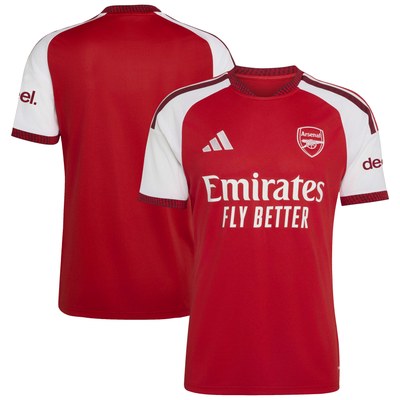 Arsenal adidas 2026/27 Home Replica Jersey - Red$45.90Shop now
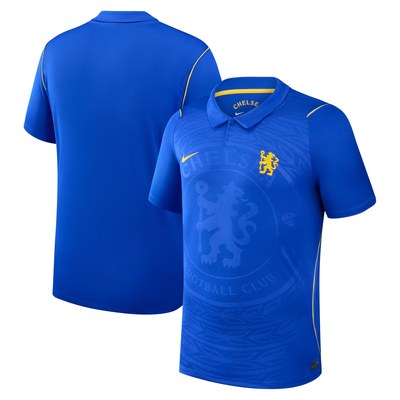 Chelsea Nike 2026/27 Home Stadium Replica Jersey - Blue$45.90Shop now
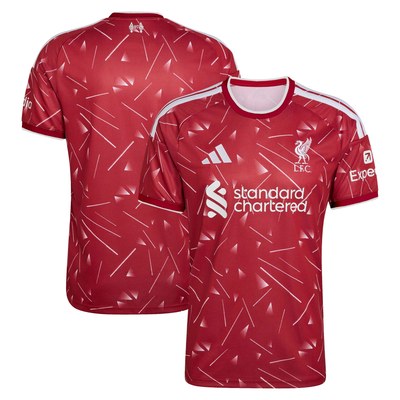 Liverpool adidas 2026/27 Home Replica Jersey - Red$45.90Shop now
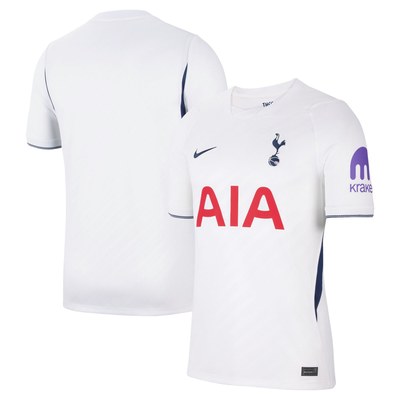 Tottenham Hotspur Nike 2026/27 Home Stadium Replica Jersey - White$45.90Shop now
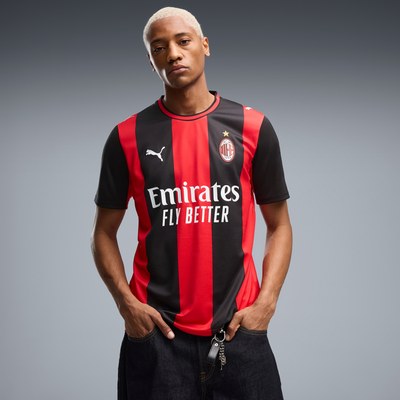 AC Milan Puma 2026/27 Home Replica Jersey - Black/Red$45.90Shop now
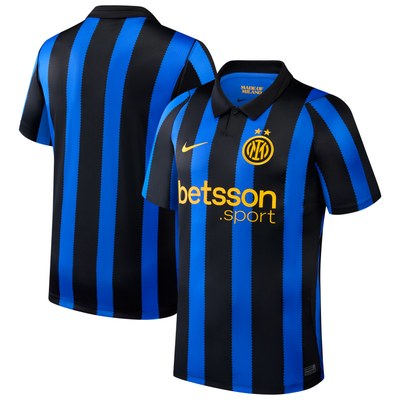 Inter Milan Nike 2026/27 Home Stadium Replica Jersey - Blue$45.90Shop now
Run the five checks below on any of these — or on the shirt already hanging in your wardrobe. The shirts will not tell you which fabric family is which on a label, but your hands will.
The Five-Point Check Before You Pay
- Collar snap — press the collar flat and let go. It should spring back immediately; a collar that stays folded will look tired forever.
- Mesh stretch — pull a side panel gently. Instant recovery means the knit is sound; a slow or permanent set means it will bag out within a season.
- Crest reverse — one look inside out. Loose threads mean embroidered or stitched; a smooth film means heat-pressed, which quietly sets your maximum washing temperature for you.
- Shoulder seam — flat and wide beats a ridged overlock where the shirt takes load. This is the cheapest thing for a maker to cut and the most visible in a year.
- Care label — fibre content and a wash temperature you can actually live with. If the label asks for cold hand-washing and your week asks for a machine, believe the conflict and choose accordingly.
Fit is the other half of the decision and it deserves its own measurements: our soccer jersey size guide covers chest, length and the youth-to-adult crossover with the same show-your-work approach.
Before You Buy
From Our Guide Library
Frequently Asked Questions
What fabric are football jerseys made of?
How can I tell if a crest is embroidered or heat-pressed?
Will the numbers on a replica jersey peel?
Is a heavier jersey better quality?
Why do some shirts cost $45.90 and others $85.99?
Does mesh rip easily?
Are striped shirts printed or knitted?
What should I check first when buying a jersey in person?
Keep Reading
Doc. materials · rev. October 10, 2026